The Joys and Challenges of Keeping a Retired Guide Dog
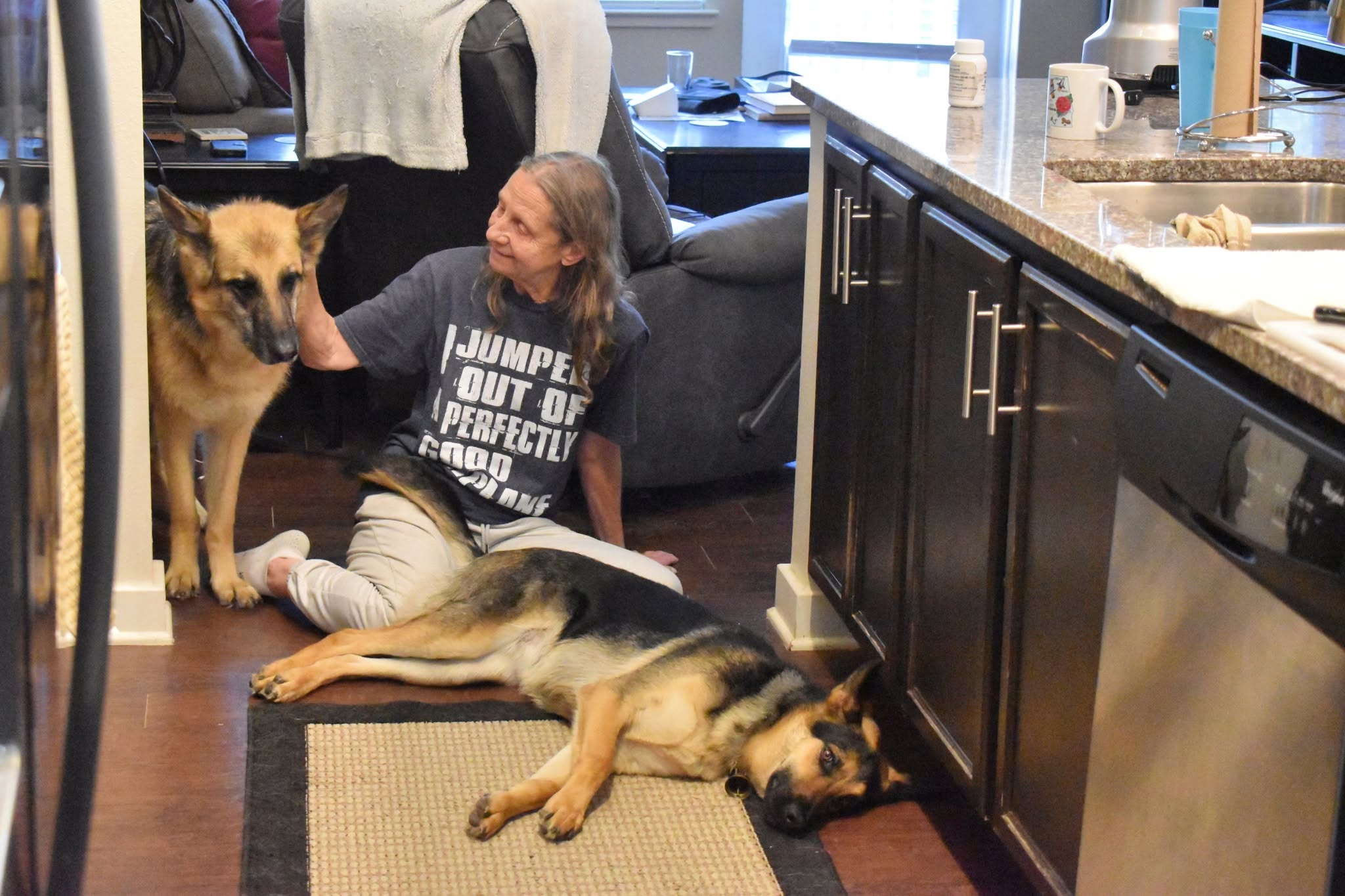
Sue affectionally pets Quan while Kasey lies on the floor in front of them.
You’ve decided to keep your guide dog after he retires. And you’ll be bringing home a new dog. Hang on, how, exactly, is that going to work?
In my experience of keeping three retired dogs, I very quickly learned that each case is different. Preparation is helpful but flexibility is key. There’s no, “One size fits all,” scenario. You can ask 20 handlers what to expect and get 20 different answers. Even if you’ve done this before, you can trust that it’s going to be different this time. A lot depends on the personalities of the two dogs. You’re going to need to be flexible and make adjustments as you go.
Trust that you will not have all the answers before you bring your new dog home.
Before You Go
Before you leave to train with Young Pup, establish who will be responsible for Old Boy’s care. It could be a partner, a relative, a friend, or someone you hire for this purpose. Depending on your situation, it might be a combination. That person should feed, groom, and exercise Old Boy. While you are away and in training with Young Pup, Old Boy will begin to bond with his new person. This same person, or people, should continue to care for Old Boy when you bring Young Pup home.
Coming Home
Upon your arrival with Young Pup, remove her harness and stay outside with her. Have Old Boy’s new person bring him out on leash and introduce the dogs to each other. Following the introduction, take everyone inside. Have Old Boys new person keep him on leash and praise him while you walk Young Pup about the house so she can get used to her new surroundings.
Most schools suggest keeping a new dog on leash or otherwise restrained for at least two weeks. During this time, consider similarly restraining Old Boy. This will help you begin to set boundaries for Young Pup and expectations for Old Boy. Having both dogs restrained ensures you know where each dog is at all times during those crucial early days.
Divide your interactions between the two dogs. With Old Boy restrained, you are free to interact with Young Pup without Old Boy inserting himself into the mix. Old Boy will begin to learn that he will now be sharing your affection and attention.
When you begin to let both dogs loose in the house, it’s a good idea for each dog to have his or her place. Some dogs will figure this out naturally while others may need some direction. Pay close attention to the dogs’ interactions. In my first experience of having a retired dog and a new dog together, the older dog would approach the young dog and growl softly. The old dog was a gentle soul while the new dog was quite assertive. I chose to ignore this behavior in this case and both dogs soon settled into acceptance of living together in harmony. It was quite different the next time around. In that case, both dogs were quite assertive so, I chose to discourage the vocalization and redirect both dogs to prevent any potential escalation.
Getting Out and About
When you leave the house with Young Pup, Old Boys new person should remain with Old Boy and make the time fun or interesting. If you go for walks in your neighborhood, leave Old Boy at home. Eventually, he’ll be able to come with you, on leash, with his new person or another member of the family or a friend. Ensure that Old Boy stays behind Young Pup and out of her way.
Stay Focused
It’s gratifying to have a beloved retired dog and a new dog living together in harmony. In all three situations when I had both a retired and a new dog, there was nothing more heart-warming than sitting on the floor with both dogs and sharing affection and love. Some of my fondest memories came when we were all interacting together.
Those early days with a new dog are a transition for all of you. Always keep in mind that you’ve just brought this new dog home to a new environment. Keep your focus on giving that dog the best chance of success you can. It takes patience and effort but watching both dogs settle in to love, play, and work as your new partnership grows makes it all worthwhile.


